
Industries
Palo Alto Cleanroom Cleaning
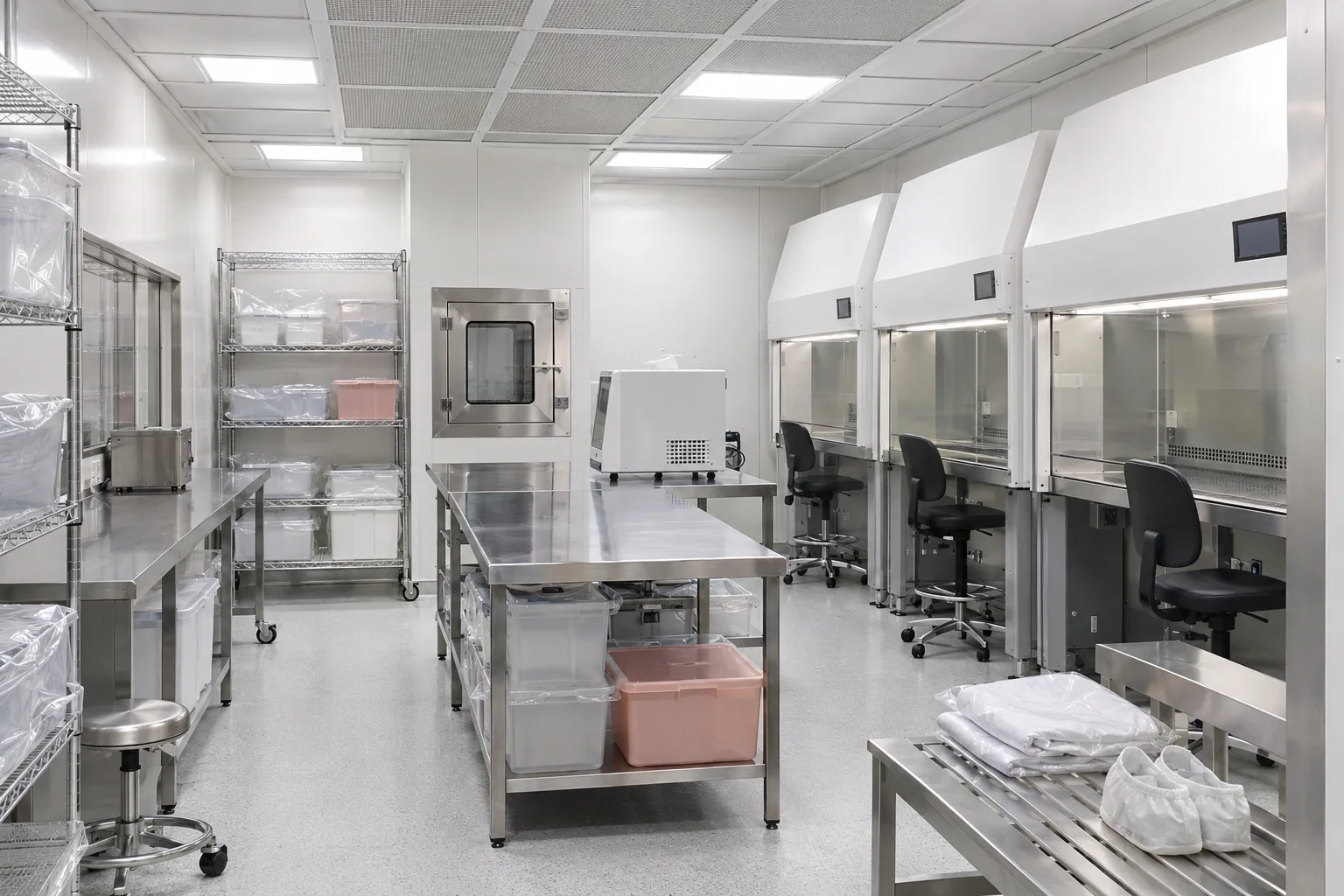
Cleanroom cleaning in Palo Alto for controlled rooms, gowning areas, airlocks and pass-throughs, carried out to your facility’s written protocol and gowning rules, with the lab offices around them on the same schedule.
Printable checklist
A controlled room is only as clean as its last visit
Particles never stop arriving in a cleanroom. They shed from people and garments, ride in on packaging and carts, and come off the work itself, then settle on walls, benches and floors. Regular cleaning keeps that load down between production runs, experiments and assembly work, so the room is ready when your team gowns up in the morning.
Palo Alto’s research buildings hold a broad mix of work, from hardware and electronics prototyping to medical device assembly and life-science research, and controlled rooms often sit a corridor away from ordinary offices. This page covers the controlled spaces themselves. Lab suites, lobbies and offices in research buildings are covered on our laboratory cleaning page, and both services can run on one schedule.
Your protocol sets every step
Before the first shift, we sit down with your facility or contamination-control lead and go through the cleaning protocol line by line. It names the rooms included, the cleaning agents and how they rotate, the wipes and mops allowed, the order of surfaces and how often each zone is done. Cleaners work from that document inside your building, and the crew’s task sheet mirrors it exactly.
When the protocol changes, because a new process arrives or a room is reclassified, the task sheet is updated before the next visit. Supervisors carry out quality inspections against the same document and share the results with your facility team.
Gowning and entry, the way your facility trains it
Cleaners gown exactly as your gowning rules direct, in the order posted in your gowning room: shoe covers or boots, hoods, coveralls, gloves and masks, whatever the room’s classification calls for. Tacky mats, step-over benches and airlocks are used the same way your own staff use them.
Supplies come in through the pass-through or the staging route you approve, wiped and bagged as your rules require, and nothing enters the room that the protocol leaves off its list. Every cleaner is background-checked before being put forward for a badge, and anyone new to the crew learns your gowning sequence before stepping inside.
Inside the controlled room
Crews start in the cleanest zone and finish at the door, and they clean the top of the room before the bottom: ceiling panels and walls first, then equipment exteriors and cleared bench tops where the protocol includes them, then the floor. That order keeps anything loosened above from landing on surfaces already done.
Floors are cleaned with the mop system your protocol names, often a multi-bucket method that keeps fresh and used solution apart, using cleanroom-compatible mops and low-lint wipes. Pass-through chambers, door handles, switches, carts and chair bases get attention on every visit, because hands touch them more than anything else in the room.
Gowning rooms, airlocks and support spaces
The rooms around a cleanroom decide how much reaches it. Gowning rooms have their benches, lockers, garment racks and mirrors wiped and their floors cleaned. Airlocks and anterooms are treated as their own zone, and tacky mat sheets are changed on the schedule you set.
Past the controlled area, the building needs its everyday care: lab offices, corridors, break rooms, restrooms and meeting rooms. Those rooms run on our recurring janitorial service, and corridors with resilient tile can be scrubbed and recoated through commercial floor care. During long research days, a day porter keeps restrooms and break rooms stocked.
Records and timing that fit your operation
Each visit is logged on your cleaning log or ours, listing the rooms covered, the tasks completed, the agents used and the cleaner who did the work. Your quality and facility teams keep a plain record of every visit with their own files.
Timing follows your production or research calendar. Routine cleaning usually runs after the last shift leaves, while wall and ceiling work is booked for shutdowns, weekends or quiet stretches set with your team, so nothing interrupts a run.
Cleanroom costs
Cleanroom work is priced from the rooms themselves rather than a flat square-foot rate. The number and size of controlled rooms, the classification and gowning level of each, how often walls and ceilings are included, the agent rotation and logging the protocol requires, the work windows allowed and the lab offices and support rooms added to the same visit all shape the figure.
A free walkthrough of the controlled area and the offices around it, with your protocol, room list and work windows in hand, sets the task list and a written quote. We are insured and bonded, carry workers’ compensation for every crew member, and send our certificate of insurance before the first shift.
Common questions
Will your cleaners follow our cleanroom protocol and gowning rules?
Yes. Your written protocol and gowning rules set the agents, tools, order of work and garments, and cleaners go over them in your building before their first visit.
Which parts of a cleanroom suite do you clean?
Controlled rooms, gowning rooms, airlocks, anterooms and pass-through chambers, plus the lab offices, corridors, break rooms and restrooms around them.
Can walls and ceilings in the controlled area be included?
Yes. Walls, ceiling panels and light fixture lenses are wiped at the frequency your protocol sets, often during a shutdown or weekend window.
Do you keep a record of each visit?
Yes. Every visit is logged with the rooms, tasks, agents and cleaner, on your log sheet or ours, and supervisors inspect the work against your protocol.
Can cleanroom cleaning share a schedule with our lab and office cleaning?
Yes. One schedule can cover the controlled rooms together with the lab suites, offices and shared areas in the rest of your building.
Services